When Self-Driving
Cars Crash
How do autonomous vehicle crashes affect how people feel about AVs?
Self-driving technology is on the rise and has been at the forefront of global media. However, not all of the news is positive. There have been recent fatalities related to autonomous vehicles (AVs) that have shaken the trust of consumers. Despite the crashes, there exists ardent support for AVs. According to the U.S. Department of Transportation, 90% of car crashes are the result of human error. People argue that self-driving vehicles could dramatically decrease that number. The successes and failures of self-driving cars will shape how receptive the public is to embracing this new technology. In this analysis, we examine human sentiment from some of the most viewed AV YouTube videos and evaluate how that sentiment changes before and after high profile AV crashes.
Overview of Top Self-Driving Car Crashes
Case 1: Uber Crash
On March 18th, 2018, an autonomous vehicle employed by Uber struck and killed a person walking their bike. This was the first pedestrian fatality as a result of a level 3 AV and the most high-profile self-driving incident. Uber faced incredible response from both ends of the extremes. Critics called for stricter regulations on this developing technology, while advocates blamed the pedestrian for crossing blindly in the dark. As displayed in the graph, there was clear global talk of this crash. Additionally, after March 23rd, AV interest was renewed after a Tesla Autopilot crash. The Model X vehicle was on autopilot (level 2 AV) when it crashed in Mountain View, killing the driver.

Case 2: Tesla Crash
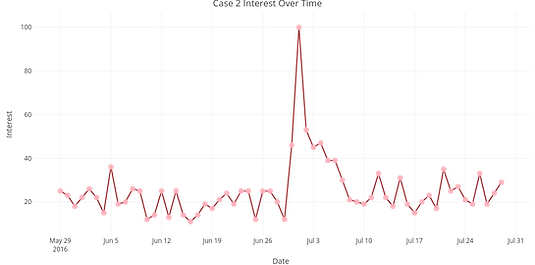
On May 5th, 2016, a Tesla Model S crashed while in autopilot mode on a Florida highway. This level 2 autonomous vehicle resulted in a driver fatality. However, the news was not broadly publicized until June 29th of that summer. As an early case of self-driving technology, this was the very first U.S. death involving semi-autonomous driving. As displayed in the graph, searches for self-driving cars spiked when the media covered it. During this time in 2016, autonomous vehicles were only gaining traction and the hype of both the dangers and opportunities had yet to build.
In June of 2018, a Waymo self-driving vehicle crashed into lane dividers in California. Although the AV technology was level 3, the operator had fallen asleep at the wheel and thus was not able to intervene when needed. This crash resulted in no fatalities and was not disclosed to the public until October 2nd, 2018, by Google (Waymo's parent company). As displayed in the graph, once the public learned about the incident, there was a spike in AV search terms. However, because the crash was not as severe as the Uber and Tesla cases, we do not see as steep of an increase in self-driving car interest. Additionally, interest in AV remains strong throughout the preceding and following month, giving way to the evermore talked about technology.
Case 3: Waymo Crash
